Vienna! See! See!     [www.vienna.cc]   [English / Deutsch / Po-Russky]

www.vienna.cc - Company Logo

Vienna.CC Photo-Gallery - Views of Vienna

Hotel ONLINE
English / Italiano / Deutsch
Español / Français
日本語 / 中文
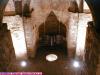
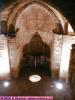
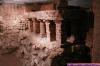
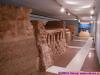
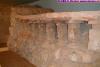
Roman ruins - Sign-post - This way to the ruins of Vindobona

Roman ruins

Sign-post
This way to the ruins of Vindobona

The Romans took the area around the present Vienna in the year 15 anteChr. in property. The area became to the Roman province Pannonia. At the end of the 1st century postChr. the 13th and later the 14.Legion built frontier fortifications, whereby Vienna was one of many military camps, which were built along the Danube and joined with with a street and a barrier, the socalled Limes. Vindobona harbored up to 20.000 persons. The camp was surrounded by the Ottakringer brook (today deep ditch) in the northwest, the Danube in the north and from a ditch at the present street Rotenturmstrasse in the east.

The concept of the camp was for 6000 man and was laid out after a standard - blueprint of the Romans: A square of walls with four gates and two rectangular crossing streets, surround from a moat. Vindobona also had a swimming pool with heated stony baths. The Romans erected also the first plumbing with spring water from the area at Perchtoldsdorf and Gumpoldskirchen. The Romans had also a well conceived canal-system. The sole of the canals deep to 1m80 was made of roof-bricks, in which in a kind of board (Tabula ansata) the number of the legion and the name of the the manufacture of the bricks of leading centurio was burnt. The canals were covered with flagstones. Smaller canals were composed of reeds of burnt clay. The camp extends over Tifer Graben - Naglergasse - Graben - Kramergasse - Rotgasse - Seitenstettengasse.

114 post.Chr. the 10.Legion drew in. 167 - 180 the Teutons destroyed Vindobona. Emperors Markus Aurelius (born 121, died 180) conquered the Teutons, 180 broke out the plague and prevented conquests to the north the Danube. The emperor died on March 17, 180. The historian Aurelius Victor reports, that Markus Aurelius died in Vindobona. Markus' son Marcus Aurelius Antoninus (born 161, since 176 Co-emperor, murdered 192) became Roman emperor. This information is however doubtful. Vindobona was set up again by the 10.Legion. There is even a Mark-Aurel-street (extension of the Tuchlauben).

In the 3rd century an economic upswing resulted for Vindobona, since the military camp was expanded greatly because of the Germanic threat from the north. At end 4th century Vindobona was destroyed by the Teuton, beginning 5.Jahrhundert there was a fire disaster and Vindobona was given up in the turmoil of the migration of nations. The Roman emperor Theodosius gave this area without a fight the Hun in the year 433. (The Hun-king Attila married Kriemhilde in Vienna - see Niebelungenlied).

The Romans influenced also the winetradition in Vienna. Around Vienna already around 750 anteChr. wine was grown, the Celts around 400 anteChr. continued the wine-growing - tradition. In the 1st century postChr. emperor Domitian in the 1st century postChr. remitted prohibition of wine-trade to the protection of the Roman wines before lowprice-imports from the provinces. Emperor Probus (276-282) stopped prohibition at the end of 3rd century, whereupon the wine-growing had an upswing. Vineyards were cultured and berries were refined. Vienna is today the only city with over a million inhabitants of the world with considerable wine-growing (approx. 700 acre).

The large time of Roman findings was in the 19th century. The archaeologist Friedrich v. Kenner and the finding-technician Josef Ilarius Nowalski were called again and again to construction sites in the 1st Vienna district to findings from the antiquity. These findings can be seen in the historic museum of the city of Vienna. The Roman ruins at Hoher Markt (entrance facing the fountain Vermählungsbrunnen) were discovered 1948 on the occasion of canal-works before the house of Hoher Markt 3 and explored by the archaeologist of the city of Vienna A.Neumann. The rooms were expanded in the years 1959 to 1961, however it only shows a small part the Roman military camp, namely two houses from the period 1st - 4th century. Well to see are the underfloor heatings. In the year 1975 there were archaeologic works again. A further room can be seen at the square Am Hof 9, in the cellar the fire-engine department. There a part of the main canal can be seen for sewage at the Via Sagularis, which was erected by the 13th legion. By the way archaeologist of the city, Mr. Ortolf Harl, discovered during construction works for the airport-train S7 in the beginning of the year 1999 beside a 1400 year old aware rider's grave a Roman ditch (for defense) from the second century postChr.

More to this

Directory-pages

Back to the starting page of the photo-directory
Directory to all Vienna-pictures click here


Search:
at AMAZON.COM

Keywords:

Google